

De Wit Plastic
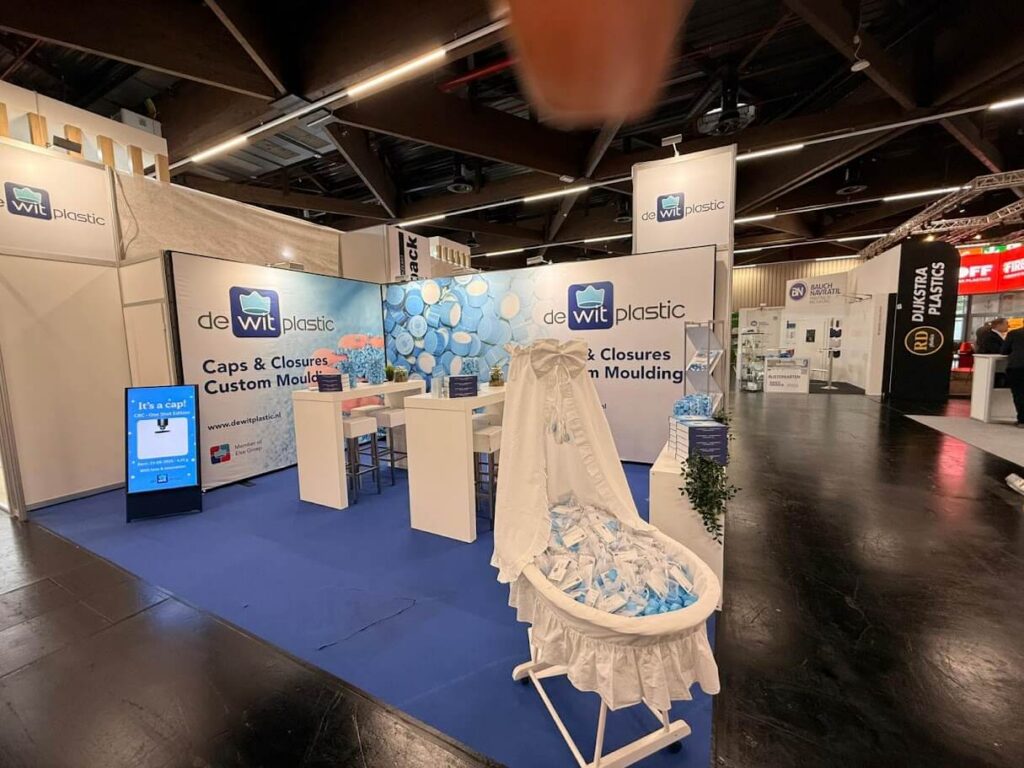
De Wit Plastic showcases innovations at a trade fair
During the trade fair, we introduced visitors to our latest plastic packaging solutions and bespoke options for the industry.
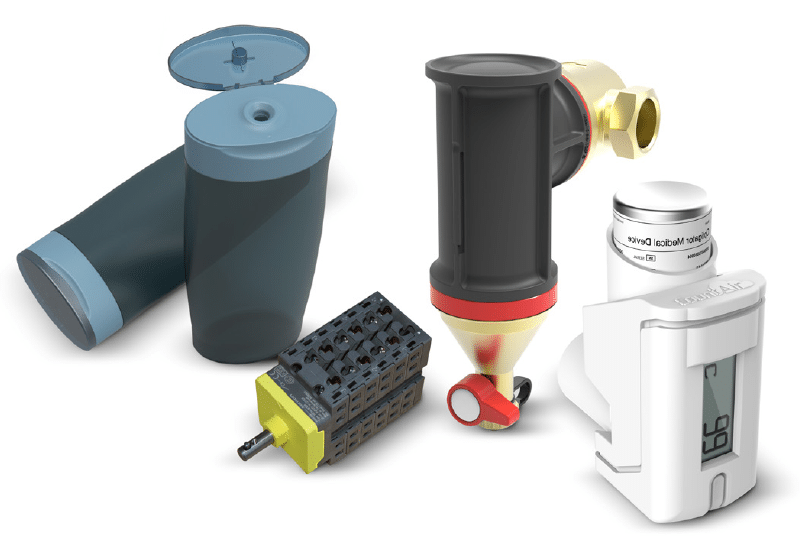
Read moreAt De Wit Plastic, we develop and injection-mould plastic products tailored to your application. Examples include a cap or fastener with a specific function, a packaging component with non-standard dimensions, or a technical component that needs to fit your product perfectly.
Whether you’re starting with a sketch, looking to improve an existing component or wishing to transfer your mould, we’ll work with you to assess the function, the material and the required quantities. We’ll guide you through the entire process, from design and mould-making to series production. Does your product consist of multiple components? If so, we can also handle the assembly.
From regulation to practice
Future-proof packaging is not achieved simply by replacing a single material. Design, functionality, use of materials, production and recyclability must be considered as a whole.
At De Wit Plastic, we combine expertise in plastics, injection moulding, moulds and product development. This enables us to assess at an early stage which choices will contribute to efficient production and packaging that meets changing requirements.
The European PPWR is also making these design choices increasingly important. By taking these into account early on in the development process, products and packaging can be better prepared to meet future requirements.
Our focus
From the initial analysis right through to a detailed design, our engineers work closely with clients. In this way, we make complex technical issues clear and deliver solutions that can be implemented straight away.
Our approach
Changes are most effective when incorporated early on in the development process. That is why we work with our customers to consider the combination of product, fastening, material and production process.
By taking technical and future packaging requirements into account at an early stage, solutions can be optimised before a product goes into mass production.

Results
Smart optimisations can help to reduce the amount of material used per product.